Appartement entier·HÎte particulier
Historic Beautifully Preserved 1800âs Retreat - Large 1bd Apt in PJ Village
Choisissez des dates pour voir les prix
Galerie photos de lâhĂ©bergement Historic Beautifully Preserved 1800âs Retreat - Large 1bd Apt in PJ Village


Avis voyageurs
10 sur 10
Exceptionnel
Appartement entier
1 chambre1 salle de bain65Â mÂČ
Ăquipements populaires
Découvrir la zone
Port Jefferson, NY
- Place, St. Charles HospitalâȘ5 min Ă piedâŹ
- Place, Parc HarborfrontâȘ6 min Ă piedâŹ
- Place, Port JeffersonâȘ8 min Ă piedâŹ
- Airport, Islip, New York (ISP-MacArthur)âȘ30 min en voitureâŹ
Options de chambre
Hébergements similaires

Hyatt Regency Greenwich
- Piscine
- Animaux de compagnie admis
- Wi-Fi gratuit
- Restaurant
4.3 sur 5, Excellent, 1âŻ007 avis
Le nouveau prix est de 185 âŹ
taxes et frais compris
6 avr. - 7 avr.
à propos de cet hébergement
Historic Beautifully Preserved 1800âs Retreat - Large 1bd Apt in PJ Village
Timeless Fusion Retreat: A 1846 Historic Haven in Port Jefferson Village
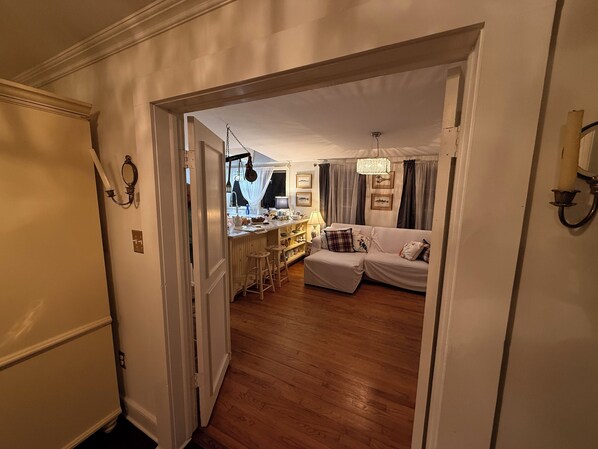
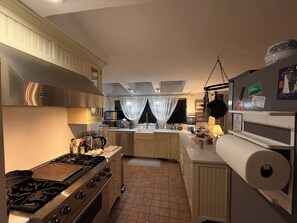
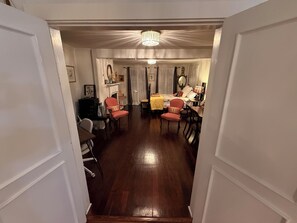
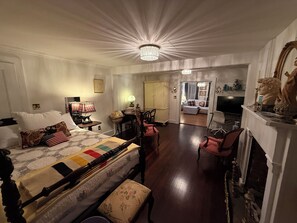
Step back 180+ years in time to this charming large 1-bedroom apartment in a beautifully preserved early 1800âs historicâNYS Registeredâhome built by a 19th century ship wright, builder and sea captain (with a colorful past) in the heart of Port Jefferson Village. Perfect for couples or small families seeking a serene and cozy getaway, this spacious retreat blends vintage elegance reflecting the 1846 historic charm, 1920s Art Deco, 1950s mid-century, and 2025 modern elements, with modern comfortsâthink commercial gas stove and oven, dark wood floors, high ceilings, and large windows flooding the space with natural light all day long. Private and secluded right in the middle of the village. Donât feel like cooking? Youâre two minutes from 20+ restaurants. Free parking, Wi-Fi, and laundry included. Book now for your escape! Old homes arenât for everyone, they say sometimes the home picks youâwe were fortunate to have had this home pick us!
To truly appreciate the Timeless Fusion Retreat at 118 South Street, one must delve into the rich tapestry of its history, a story woven from the salt-sprayed sails of Long Islandâs maritime golden age and the enduring spirit of American ingenuity. Constructed circa 1846 by Edward Hawkins, a master shipbuilder whose life embodied the rugged determination of 19th-century American enterprise, this Greek Revival gem stands as a living monument to Port Jeffersonâs pivotal role in the nationâs seafaring legacy. Born on July 14, 1819, in the quiet hamlet of Bayport, Long Island, Edward learned the craft of shipbuilding in Derby, Connecticut, honing his skills amid the clatter of hammers and the scent of fresh-hewn oak. By the early 1840s, he had returned to his native Suffolk County, establishing himself in Port Jeffersonâa bustling shipbuilding center that, by mid-century, boasted over a dozen yards crafting vessels that plied the Atlantic trade routes.
Port Jefferson, then known as Drowned Meadow, was no sleepy village; it was a vital artery in Long Islandâs maritime economy, a microcosm of Americaâs explosive growth during the antebellum era. In the 1840s, the village hummed with the labor of craftsmen like Hawkins, whose hands shaped schooners and brigs that carried goods from New York Harbor to the Caribbean and beyond. This was the heyday of American shipbuilding on Long Island, where Suffolk Countyâs North Shore yardsâfueled by abundant timber from the islandâs pine barrens and skilled artisans from Connecticutâproduced hundreds of vessels annually. Hawkins himself contributed to this legacy, working in the Brooklyn Navy Yard before venturing to Shanghai, China, in 1854, where he labored in the bustling shipyards of the Qing Dynastyâs dry docks. There, amid the exotic fusion of Eastern and Western technologies, he helped construct the first dry dock for large vessels in the region, a feat that bridged continents and symbolized Americaâs expanding global reach.
Returning in 1844, Hawkins settled in Port Jefferson, marrying Harriet Davis Swezey on December 18, 1867, in a union that blended two prominent Long Island familiesâthe Swezeys, farmers and merchants of Setauket, and the Hawkins, shipwrights of Bayport.
Their life at 118 South Street was one of quiet domesticity amid the roar of the shipyards. The couple welcomed two children: Edward Eugene in 1845 and Harriet Augusta in 1848, both born in the homeâs sunlit rooms that overlooked the harborâs ceaseless activity. Edwardâs career as a ship carpenter and captain reflected the broader American narrative of the eraâthe Jacksonian spirit of self-made men forging empires on the waves. Long Islandâs maritime culture, rooted in the whaling voyages of the 17th century and exploding with the clipper ship boom of the 1840s and 1850s, was the backbone of the young nationâs economy. Port Jefferson alone launched over 1,000 vessels between 1800 and 1900, many crewed by local sons like Hawkins, who navigated the treacherous China trade, transporting tea, silk, and porcelain that filled the homes of Suffolkâs emerging middle class. This trade not only enriched the region but also infused American culture with Eastern influencesâevident in the Hawkins Houseâs subtle nods to global aesthetics, from its tapered porch columns inspired by ancient temples to the resilient shingle siding that withstood the salty gales of Long Island Sound.
Architecturally, the Hawkins House exemplifies the Greek Revival style that swept America in the 1830s and 1840s, a democratic response to the Federal periodâs formality. With its five-bay facadeâsymmetrical windows flanked by two-over-six sash panes, framed by tapered Doric columns on the entry porchâthe home embodies the eraâs ideal of classical simplicity and republican virtue. Shingle siding, a hallmark of Long Islandâs vernacular architecture, clads the structure in a texture that echoes the islandâs maritime resilience, while old glass windows distort the light in a way that whispers of hand-blown craftsmanship. Inside, the five-bay layout opens to a flowing parlor and bedroom, where molded pilasters and corner blocks frame doorways like sentinels from ancient Athens. This style, popularized by architects like Minard Lafever and Alexander Jackson Davis, symbolized Americaâs aspiration to emulate the democratic ideals of Periclean Greece, a fitting backdrop for a shipbuilder whose vessels carried the stars and stripes to distant shores.
The Hawkins familyâs story is inseparable from Long Islandâs cultural mosaic. Suffolk County, with its fertile farms and rugged coast, was a cradle of American innovation in the 19th century. Shipbuilding here wasnât just trade; it was identityâa fusion of Yankee ingenuity and immigrant labor that built the U.S. Navyâs backbone during the War of 1812 and fueled the clipper ship era. Edwardâs voyage to Shanghai in 1854, during the Taiping Rebellion, placed him at the crossroads of East and West, a microcosm of Americaâs opening to global commerce via the Treaty of Wanghia (1844). Harriet, daughter of the Swezey family, brought agrarian roots to this seafaring life, her lineage tracing to early Quaker settlers who shaped Long Islandâs communal ethos. Their children, Edward Eugene and Harriet Augusta, grew up in a home that bridged these worlds: the parlor echoing with tales of typhoons and tea clippers, the kitchen fragrant with recipes from both shores.
Tragedy struck in 1874 when Edward died on March 23, buried in Middle Island Cemetery, leaving Harriet to raise the family amid the fading shipyards. Port Jeffersonâs maritime heyday waned with the Civil Warâs end and steamshipsâ rise, but the Hawkins House endured, its Greek Revival form a testament to the eraâs optimism. Today, as part of the Port Jefferson Village Historic District (listed 2006), it stands among 98 contributing structures, a preserved slice of Suffolkâs heritage. Long Islandâs maritime cultureâcelebrated in museums like the Maritime Explorium and annual festivalsâlives on in such homes, reminding us of the islandâs role in Americaâs ascent from colonial outpost to global power.
The Hawkins House, with its tapered columns and old glass panes, whispers of the shipwrights who built not just vessels, but the very backbone of the republic.
Step into this legacy at the Timeless Fusion Retreat, where 1846âs maritime soul meets 1920s Art Deco glamour, 1950s mid-century whimsy, and 2025âs sleek innovation. The antique four-poster bed, protected by modern steel slats, cradles you in Victorian splendor, while glass shelves gleam with curated treasuresâporcelain from Shanghai voyages, milk glass vases evoking post-war optimism, and Deco lamps casting golden light. The eat-in kitchen/family area, with its commercial gas stove and marble counters, invites communal meals, perhaps inspired by Harrietâs recipes, under high ceilings that flood the space with harbor breezes. A plush sofa bed in the nook pulls out to a full-size haven for extra guests, blending comfort with the eraâs playful curves.
The private deck, overlooking a lush garden, offers al fresco evenings reminiscent of Hawkinsâ sea captainsâ quarters, with wicker chairs and string lights for stargazing. Laundry facilities in the basement (watch the 5â8â ceiling) ensure hassle-free stays, while free parking and Wi-Fi keep you connected to the world beyond the Sound.
Nestled in Port Jeffersonâs heartâtwo minutes from 20+ waterfront restaurants, the LIRR ferry to Connecticut, and a short drive from Stony Brook Universityâthis retreat is a portal to Long Islandâs soul. Walk cobblestone streets lined with fellow Greek Revival gems, visit the Maritime Explorium for shipbuilding lore, or kayak the harbor where Hawkinsâ vessels once launched. For families, itâs a serene base for beach days at Cedar Beach; for couples, a romantic nod to the villageâs whaling past.
Old homes arenât for everyone, but when one picks you, itâs magic. We were fortunateânow itâs your turn. Book now and let the Timeless Fusion Retreat transport you to an era of sails and stories, where history isnât just seen, but felt. Lovingly restored and maintained by the MacDuff-Henderson Family. The proceeds from your stay go back into the home to ensure it is well maintained and gives back by sharing its wonderful heritage with you.
Step back 180+ years in time to this charming large 1-bedroom apartment in a beautifully preserved early 1800âs historicâNYS Registeredâhome built by a 19th century ship wright, builder and sea captain (with a colorful past) in the heart of Port Jefferson Village. Perfect for couples or small families seeking a serene and cozy getaway, this spacious retreat blends vintage elegance reflecting the 1846 historic charm, 1920s Art Deco, 1950s mid-century, and 2025 modern elements, with modern comfortsâthink commercial gas stove and oven, dark wood floors, high ceilings, and large windows flooding the space with natural light all day long. Private and secluded right in the middle of the village. Donât feel like cooking? Youâre two minutes from 20+ restaurants. Free parking, Wi-Fi, and laundry included. Book now for your escape! Old homes arenât for everyone, they say sometimes the home picks youâwe were fortunate to have had this home pick us!
To truly appreciate the Timeless Fusion Retreat at 118 South Street, one must delve into the rich tapestry of its history, a story woven from the salt-sprayed sails of Long Islandâs maritime golden age and the enduring spirit of American ingenuity. Constructed circa 1846 by Edward Hawkins, a master shipbuilder whose life embodied the rugged determination of 19th-century American enterprise, this Greek Revival gem stands as a living monument to Port Jeffersonâs pivotal role in the nationâs seafaring legacy. Born on July 14, 1819, in the quiet hamlet of Bayport, Long Island, Edward learned the craft of shipbuilding in Derby, Connecticut, honing his skills amid the clatter of hammers and the scent of fresh-hewn oak. By the early 1840s, he had returned to his native Suffolk County, establishing himself in Port Jeffersonâa bustling shipbuilding center that, by mid-century, boasted over a dozen yards crafting vessels that plied the Atlantic trade routes.
Port Jefferson, then known as Drowned Meadow, was no sleepy village; it was a vital artery in Long Islandâs maritime economy, a microcosm of Americaâs explosive growth during the antebellum era. In the 1840s, the village hummed with the labor of craftsmen like Hawkins, whose hands shaped schooners and brigs that carried goods from New York Harbor to the Caribbean and beyond. This was the heyday of American shipbuilding on Long Island, where Suffolk Countyâs North Shore yardsâfueled by abundant timber from the islandâs pine barrens and skilled artisans from Connecticutâproduced hundreds of vessels annually. Hawkins himself contributed to this legacy, working in the Brooklyn Navy Yard before venturing to Shanghai, China, in 1854, where he labored in the bustling shipyards of the Qing Dynastyâs dry docks. There, amid the exotic fusion of Eastern and Western technologies, he helped construct the first dry dock for large vessels in the region, a feat that bridged continents and symbolized Americaâs expanding global reach.
Returning in 1844, Hawkins settled in Port Jefferson, marrying Harriet Davis Swezey on December 18, 1867, in a union that blended two prominent Long Island familiesâthe Swezeys, farmers and merchants of Setauket, and the Hawkins, shipwrights of Bayport.
Their life at 118 South Street was one of quiet domesticity amid the roar of the shipyards. The couple welcomed two children: Edward Eugene in 1845 and Harriet Augusta in 1848, both born in the homeâs sunlit rooms that overlooked the harborâs ceaseless activity. Edwardâs career as a ship carpenter and captain reflected the broader American narrative of the eraâthe Jacksonian spirit of self-made men forging empires on the waves. Long Islandâs maritime culture, rooted in the whaling voyages of the 17th century and exploding with the clipper ship boom of the 1840s and 1850s, was the backbone of the young nationâs economy. Port Jefferson alone launched over 1,000 vessels between 1800 and 1900, many crewed by local sons like Hawkins, who navigated the treacherous China trade, transporting tea, silk, and porcelain that filled the homes of Suffolkâs emerging middle class. This trade not only enriched the region but also infused American culture with Eastern influencesâevident in the Hawkins Houseâs subtle nods to global aesthetics, from its tapered porch columns inspired by ancient temples to the resilient shingle siding that withstood the salty gales of Long Island Sound.
Architecturally, the Hawkins House exemplifies the Greek Revival style that swept America in the 1830s and 1840s, a democratic response to the Federal periodâs formality. With its five-bay facadeâsymmetrical windows flanked by two-over-six sash panes, framed by tapered Doric columns on the entry porchâthe home embodies the eraâs ideal of classical simplicity and republican virtue. Shingle siding, a hallmark of Long Islandâs vernacular architecture, clads the structure in a texture that echoes the islandâs maritime resilience, while old glass windows distort the light in a way that whispers of hand-blown craftsmanship. Inside, the five-bay layout opens to a flowing parlor and bedroom, where molded pilasters and corner blocks frame doorways like sentinels from ancient Athens. This style, popularized by architects like Minard Lafever and Alexander Jackson Davis, symbolized Americaâs aspiration to emulate the democratic ideals of Periclean Greece, a fitting backdrop for a shipbuilder whose vessels carried the stars and stripes to distant shores.
The Hawkins familyâs story is inseparable from Long Islandâs cultural mosaic. Suffolk County, with its fertile farms and rugged coast, was a cradle of American innovation in the 19th century. Shipbuilding here wasnât just trade; it was identityâa fusion of Yankee ingenuity and immigrant labor that built the U.S. Navyâs backbone during the War of 1812 and fueled the clipper ship era. Edwardâs voyage to Shanghai in 1854, during the Taiping Rebellion, placed him at the crossroads of East and West, a microcosm of Americaâs opening to global commerce via the Treaty of Wanghia (1844). Harriet, daughter of the Swezey family, brought agrarian roots to this seafaring life, her lineage tracing to early Quaker settlers who shaped Long Islandâs communal ethos. Their children, Edward Eugene and Harriet Augusta, grew up in a home that bridged these worlds: the parlor echoing with tales of typhoons and tea clippers, the kitchen fragrant with recipes from both shores.
Tragedy struck in 1874 when Edward died on March 23, buried in Middle Island Cemetery, leaving Harriet to raise the family amid the fading shipyards. Port Jeffersonâs maritime heyday waned with the Civil Warâs end and steamshipsâ rise, but the Hawkins House endured, its Greek Revival form a testament to the eraâs optimism. Today, as part of the Port Jefferson Village Historic District (listed 2006), it stands among 98 contributing structures, a preserved slice of Suffolkâs heritage. Long Islandâs maritime cultureâcelebrated in museums like the Maritime Explorium and annual festivalsâlives on in such homes, reminding us of the islandâs role in Americaâs ascent from colonial outpost to global power.
The Hawkins House, with its tapered columns and old glass panes, whispers of the shipwrights who built not just vessels, but the very backbone of the republic.
Step into this legacy at the Timeless Fusion Retreat, where 1846âs maritime soul meets 1920s Art Deco glamour, 1950s mid-century whimsy, and 2025âs sleek innovation. The antique four-poster bed, protected by modern steel slats, cradles you in Victorian splendor, while glass shelves gleam with curated treasuresâporcelain from Shanghai voyages, milk glass vases evoking post-war optimism, and Deco lamps casting golden light. The eat-in kitchen/family area, with its commercial gas stove and marble counters, invites communal meals, perhaps inspired by Harrietâs recipes, under high ceilings that flood the space with harbor breezes. A plush sofa bed in the nook pulls out to a full-size haven for extra guests, blending comfort with the eraâs playful curves.
The private deck, overlooking a lush garden, offers al fresco evenings reminiscent of Hawkinsâ sea captainsâ quarters, with wicker chairs and string lights for stargazing. Laundry facilities in the basement (watch the 5â8â ceiling) ensure hassle-free stays, while free parking and Wi-Fi keep you connected to the world beyond the Sound.
Nestled in Port Jeffersonâs heartâtwo minutes from 20+ waterfront restaurants, the LIRR ferry to Connecticut, and a short drive from Stony Brook Universityâthis retreat is a portal to Long Islandâs soul. Walk cobblestone streets lined with fellow Greek Revival gems, visit the Maritime Explorium for shipbuilding lore, or kayak the harbor where Hawkinsâ vessels once launched. For families, itâs a serene base for beach days at Cedar Beach; for couples, a romantic nod to the villageâs whaling past.
Old homes arenât for everyone, but when one picks you, itâs magic. We were fortunateânow itâs your turn. Book now and let the Timeless Fusion Retreat transport you to an era of sails and stories, where history isnât just seen, but felt. Lovingly restored and maintained by the MacDuff-Henderson Family. The proceeds from your stay go back into the home to ensure it is well maintained and gives back by sharing its wonderful heritage with you.

Lors de votre séjour dans cet appartement, vous ne serez qu'à quelques minutes de marche de Theatre Three. Parmi les prestations de cet hébergement, on compte une laverie. L'accÚs Wi-Fi à Internet gratuit et une cheminée sont disponibles dans cet appartement.
- Appartement climatisé avec une machine à laver, une cheminée et un patio
- Wi-Fi gratuit (vitesse : 250 Mbit/s ou plus (pour 3 Ă 5 pers. ou jusquâĂ 10 appareils))
- Parmi les prestations offertes, on trouve une laverie et un mur végétal
- à deux pas de Maison musée Mather et de Theatre Three
Cet appartement offre de nombreuses prestations et notamment des barbecues, un jardin et une laverie. La réception est ouverte 24h/24.
Cet appartement de Port Jefferson est non-fumeurs.
Services et équipements
Conditions
Informations importantes
Ă savoir absolument
Cet hĂ©bergement est gĂ©rĂ© par un hĂŽte privĂ© (une partie nâagissant pas dans le cadre de son commerce, son entreprise ou sa profession). La lĂ©gislation europĂ©enne relative aux droits des consommateurs ne sâappliquera pas Ă votre rĂ©servation, y compris le droit de rĂ©tractation. Toutefois, la politique dâannulation dĂ©finie par lâhĂŽte privĂ© couvrira votre rĂ©servation. Les articles 1100 Ă 1386-1 du Code civil français sâappliqueront. https://www.legifrance.gouv.fr/codes/id/LEGISCTA000032040794/
Des frais pour toute personne supplĂ©mentaire peuvent ĂȘtre facturĂ©s et dĂ©pendent de la politique de l'hĂ©bergement
Une piĂšce d'identitĂ© officielle avec photo et un dĂ©pĂŽt de garantie en espĂšces, par carte de crĂ©dit ou par carte de dĂ©bit, peuvent ĂȘtre demandĂ©s Ă l'arrivĂ©e pour couvrir tous frais imprĂ©vus
Les demandes spĂ©ciales, qui ne peuvent pas ĂȘtre garanties, sont soumises Ă disponibilitĂ© Ă l'arrivĂ©e et peuvent entraĂźner des frais supplĂ©mentaires
Les fĂȘtes et les Ă©vĂ©nements de groupe sont interdits
Possibilité de location à long terme
L'hÎte a indiqué que l'hébergement était équipé d'un détecteur de monoxyde de carbone
L'hÎte a indiqué que l'hébergement était équipé d'un détecteur de fumée
Cet hébergement comporte des espaces extérieurs comme des balcons, des patios ou des terrasses potentiellement non adaptés aux enfants. Si vous avez des questions, nous vous recommandons de contacter l'hébergement avant votre arrivée afin de savoir s'il peut vous accueillir dans une chambre adéquate.
Cet hébergement est géré par notre partenaire, Abritel. Un e-mail d'Abritel contenant un lien vers un compte Abritel qui vous permettra de modifier ou d'annuler votre réservation
Vous recevrez un e-mail contenant des instructions relatives à l'arrivée et au départ de la part de l'hÎte. Vous recevrez également un e-mail de la part d'Abritel contenant un lien vers un compte Abritel qui vous permettra de gérer votre réservation.
Avis sur lâhĂ©bergement Historic Beautifully Preserved 1800âs Retreat - Large 1bd Apt in PJ Village
Avis
10
Exceptionnel
9,4/10
Propreté
Avis
8 déc. 2025
Les points forts : Propreté
Séjour de 2 nuits en décembre 2025
10/10 Excellent
Claire P.
2 nov. 2025
Les points forts : Propreté
Claire P.
Séjour de 3 nuits en octobre 2025
10/10 Excellent
Kelly J.
26 oct. 2025
Les points forts : Propreté
Kelly J.
Séjour de 2 nuits en octobre 2025